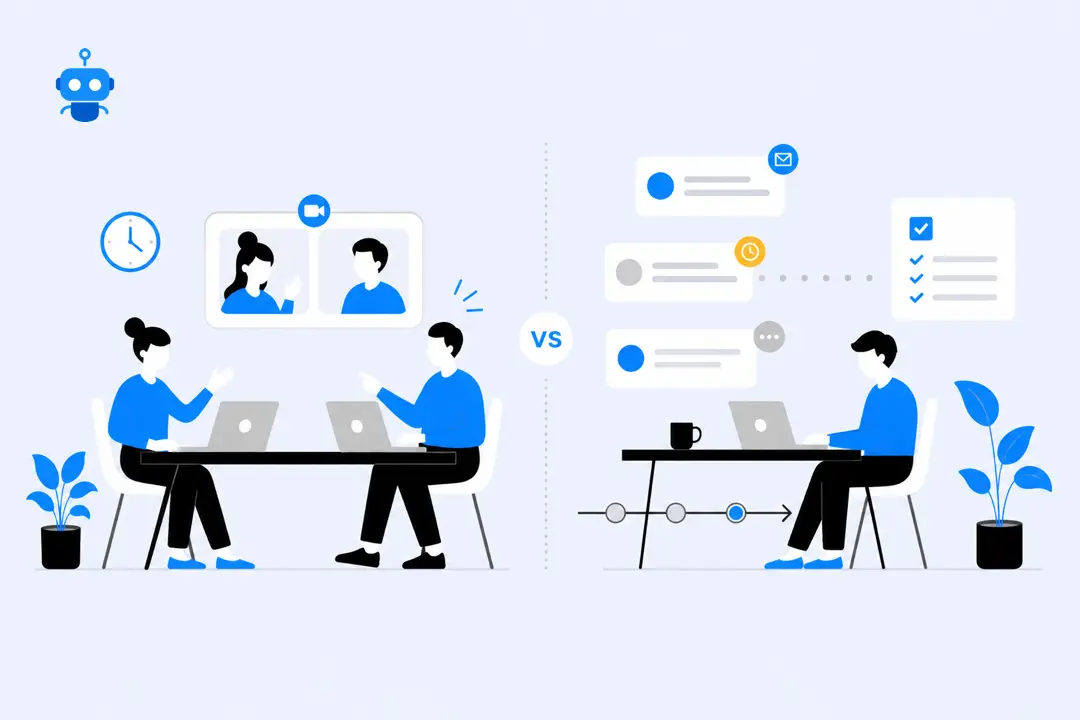

How much time companies waste every day without realizing it? Probably more than most teams would like to admit. Time is one of a company's most valuable resources. Yet every day, teams lose hours to unnecessary meetings, repetitive updates, manual follow-ups and constant interruptions.
The problem is rarely one massive productivity failure. Instead, it is a collection of small things:
- A 15-minute stand-up
- A quick status call
- A few reminder messages
- A meeting that could have been a message
- Another meeting to discuss what happened in the previous meeting
Individually, these activities may look harmless. Multiply them across an entire team, every working day, and the cost becomes much harder to ignore.
Atlassian research involving 5,000 knowledge workers found that meetings were considered ineffective 72% of the time. Asana's 2023 Anatomy of Work research also found that unnecessary meetings cost knowledge workers 2.8 hours per week, rising to 3.6 hours for senior leaders.
The issue is not that teams should stop communicating. It is that communication should help work move forward rather than constantly interrupting it.
The Hidden Cost of a 15-Minute Stand-Up
A 15-minute daily stand-up sounds short. But the real cost depends on how many people are attending.
For a team of 10:
10 employees × 15 minutes × 5 days = 12.5 person-hours per week
If that meeting is scheduled every working week across a 52-week calendar, that becomes:
12.5 × 52 = 650 person-hours per year
That is more than 16 full 40-hour workweeks of scheduled meeting time.
For a team of 20, the same calculation becomes:
20 employees × 15 minutes × 5 days × 52 weeks = 1,300 person-hours
Of course, actual annual totals may be lower because of cancelled meetings and other schedule changes. The point is not that every one of those hours is wasted. It is how quickly a small recurring meeting becomes a large time commitment when multiplied across a team.
And these calculations only cover scheduled meeting time. They do not include preparation, late starts, off-topic conversations, or the disruption created by fitting a meeting into everyone's day.
A live stand-up can be valuable when a team needs to resolve blockers, coordinate complicated work, or make a decision. But if participants are simply repeating predictable updates, an asynchronous format may work better.
Where Companies Lose Time Every Day
Meetings are only one part of the problem. Companies also lose time through small, repetitive workflows that happen throughout the working week.
1. Daily stand-ups
Daily stand-ups are designed to help teams understand progress, plans, and blockers.
But they can become inefficient when everyone has to stop working and attend a live meeting only to say something like:
"Yesterday, I worked on the same project. Today, I'll continue working on it. I have no blockers."
The update may be useful. It just does not necessarily require ten people to be available at the same time.
A live stand-up becomes more valuable when there is actually something to discuss. Routine updates, on the other hand, can often be collected asynchronously and reviewed when convenient.
2. Status updates and manual follow-ups
Managers regularly ask questions such as:
- Have you completed this task?
- What are you working on today?
- Is anything blocking you?
- Can you share your weekly update?
- Has everyone submitted their response?
Each interaction may take only a minute or two.
But then the manager needs to remember who has responded, identify who has not, send another reminder, check again later, and possibly chase people individually.
Across several recurring processes, managers can end up acting like human reminder systems.
Automated follow-ups can make this easier by collecting responses consistently and reminding people who have not responded without requiring someone to manually chase the team every time.
3. Meetings about previous meetings
Some meetings create more meetings instead of creating progress.
A team holds a status meeting. One topic remains unresolved, so another meeting gets scheduled. Then a smaller group needs a third meeting to make the actual decision.
This often happens when the original meeting has:
- No clear purpose
- No prepared context
- Too many attendees
- No decision-maker
- No documented outcome
- No assigned next steps
Everyone attended, but nobody left knowing exactly what should happen next.
That is not a communication problem that needs another meeting. It is a workflow problem.
4. Collecting feedback and making small decisions
Companies often schedule meetings for questions that could be answered with a simple poll or form.
Examples include:
- Choosing a meeting time
- Selecting between two design options
- Collecting retrospective feedback
- Confirming event attendance
- Voting on a team activity
- Gathering anonymous suggestions
- Asking employees about workplace preferences
When responses are collected manually through chat, someone must read every message, organize the answers and calculate the result.
A structured poll can complete the same process without requiring a meeting or a long message thread.
Not Every Decision Needs a Meeting
Teams also spend time scheduling calls for decisions that could be handled much faster.
For example:
- Choosing between two options
- Collecting retrospective feedback
- Finding a preferred date
- Gathering ideas
- Asking for team preferences
- Checking agreement on a simple decision
Imagine spending 15 minutes comparing calendars just to arrange a 30-minute meeting about which date works best.
Sometimes, a poll could answer the question before the meeting invitation has even been written.
Forms and quick polls allow teams to gather structured feedback without requiring everyone to be available at exactly the same moment.
That means fewer interruptions for employees and faster answers for whoever needs to make the decision.
How Much Time Could Your Company Recover?
Consider a hypothetical company with 20 employees.
If avoidable coordination consumes just 30 minutes per employee each working day, that equals:
20 employees × 30 minutes × 5 days = 50 person-hours per week
That does not mean the company can simply eliminate all 50 hours. Communication, coordination, and collaboration are still necessary.
The opportunity is to reduce the unnecessary part.
Even small changes can have a noticeable effect.
For example, imagine a 10-person team shortens its daily stand-up from 15 minutes to 10 minutes by collecting routine information beforehand.
That removes five minutes of synchronous meeting time per person.
Across 52 scheduled weeks:
10 employees × 5 minutes × 5 days × 52 weeks = approximately 217 person-hours of scheduled meeting time
The team still communicates. The update still happens. But employees spend less time waiting through information that could have been shared beforehand.
Meetings Are Not the Enemy
Some conversations absolutely should happen live.
Meetings are useful when teams need to:
- Make an important decision
- Debate different approaches
- Brainstorm together
- Solve a complicated blocker
- Discuss sensitive topics
- Give detailed feedback
- Handle urgent situations
The problem starts when meetings become the default way to exchange information.
A useful rule is:
Use asynchronous communication to collect information. Use meetings to discuss and act on that information.
Before adding another meeting to the calendar, ask three questions.
Does everyone need to participate?
If some attendees only need to know the outcome, share it with them afterwards instead of asking them to sit through the whole meeting.
Does everyone need to respond at the same time?
If not, an asynchronous update, form, or poll may work better.
Does this require an actual conversation?
If you simply need progress updates, straightforward feedback, or a few structured answers, another live call may not add much value.
Give People More Time to Actually Work
The goal of better workflows is not to squeeze more productivity out of every minute.
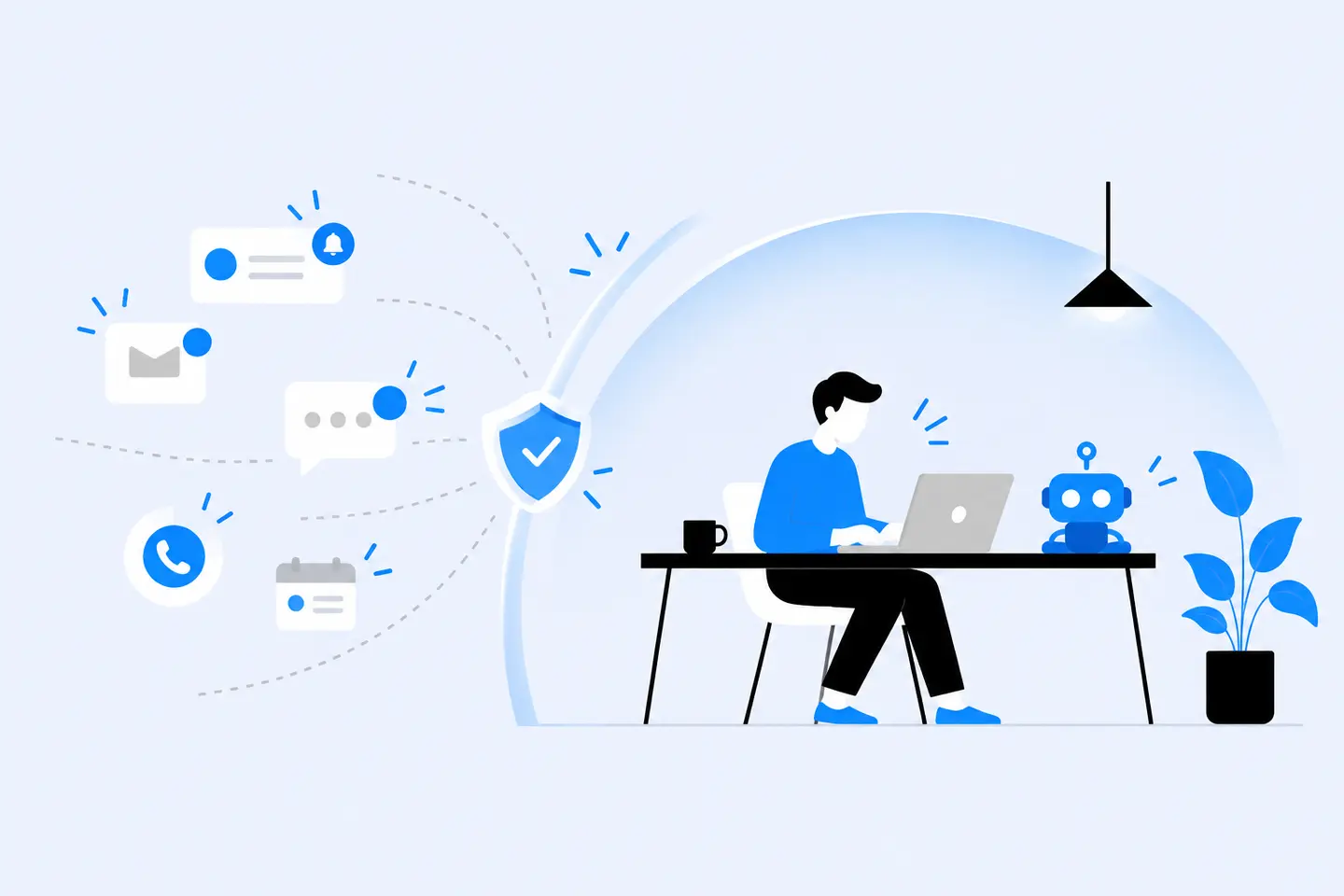
It is to give people longer stretches of uninterrupted time to do meaningful work.
Depending on the team, that could mean:
- Building the product
- Helping customers
- Fixing technical debt
- Writing documentation
- Creating marketing campaigns
- Improving internal processes
- Solving difficult problems
- Simply having enough uninterrupted time to think
When employees constantly switch between meetings, reminders, status questions, and their actual responsibilities, the working day becomes fragmented.
Reducing that fragmentation can be just as important as reducing the total number of meetings.
Replace More Meetings With Better Workflows
Companies do not necessarily need more time. They need better ways to use the time they already have.
Start by reviewing recurring meetings. Remove meetings without a clear purpose, reduce unnecessary attendees, and collect routine information before a live discussion.
Then look at the repetitive work surrounding those meetings.
Can reminders be automated instead of manually sent? Can a form collect feedback? Can a poll settle a simple decision? Can routine requests be managed through one consistent process?
Tools such as Sup! can help with these recurring workflows. Teams can run asynchronous stand-ups, retrospectives, and follow-ups, create forms and polls, and also automate reminders, track team mood, and work directly within Slack and Microsoft Teams.
 Add to Slack
 Add to Teams
 Add to Webex
The goal is not less communication.
It is better communication with fewer unnecessary interruptions.
Make Every Recurring Workflow Earn Its Place
So, how much time are companies wasting every day?
There is no single number that applies to every organization. But unnecessary meetings, repeated status requests, manual reminders, scattered decisions, and constant interruptions can consume a surprising amount of collective time.
Start small. Review one recurring meeting or workflow and ask whether it still needs to work the way it does today. Move routine information to asynchronous updates, automate predictable follow-ups, and keep live meetings for conversations where real-time discussion adds value.
Before putting another recurring meeting on the calendar, ask one simple question:
Is this really the best use of everyone's time?
Meet for meaningful conversations. Make routine updates asynchronous. And give your team more time to do the work that actually moves the company forward.