Happy and enthusiastic workers are not just productive workers but also the most loyal ones. But how does that happen? It happens through the five organizational spontaneities (as defined by a veteran and expert of organizational psychology, Daniel Katz:) helping co-workers, protecting the organization, making constructive suggestions, developing oneself, and spreading goodwill. Katz believed that high positive mood points (or momentary affect) can directly trigger organizational spontaneities.
The mood and the discrete emotions of the employees also actively Influence cognitive performance and flexibility: consequently improving performance and task completion rates.
Understanding employee's moods and emotions in an organization
British research in collaboration with Oxford University found that happy workers are 13% more productive. Even at the maximum macro level, it can be seen that the happiest nations are the most productive ones. Norway, Switzerland, Luxembourg, Denmark, and the Netherlands made the top 10 list for both the highest GDP per hour worked and the Happiness index.
Considering the major role of mood and emotions in determining productivity, it is integral for all organizations to develop a deeper understanding of moods and emotions at the workplace.
However, be prepared for things to get a little complicated–after all, it's human emotions. We are never just happy or just sad. Human emotions are always layered!
What is momentary affect?
Imagine, at work, you are being asked, "how are you feeling?" Now, all the feelings you experience at that moment are your momentary affect for that moment. This is why momentary affect is often described as the feelings experienced at the moment. However, in certain scenarios, momentary affect can indicate an entire (and a broader) phenomenon. The phenomenon of an employee's emotional reactions to workplace events, and how their emotion determines their behavioral and attitudinal outcomes. Two major categories of momentary affect are moods and discrete emotions.
Identifying mood
Moods are temporary but long-lasting. As compared to discrete emotions they are much diffused and are not directed at specific events. For instance, feeling enthusiastic, excited, calm, confident, nervous, or tense is a mood. It is also possible for people to feel two complementary moods simultaneously, for example, calm and confident, or enthusiastic and confident. But, it is not possible to feel two contradictory mood points simultaneously, for example, Calm and excited, or confident and nervous.
The mood is actually what brings layers to emotions. Two people at a workplace can be happy, yet both can behave entirely differently–this is because they are at different mood points. Understanding how mood and emotion interact with each other to determine the employee's final behavioral and attitudinal outcome is of consequential importance.
Identifying discrete emotions
Discrete emotions are core emotions that every human being is capable of exhibiting, irrespective of age, gender, race, ethnicity, and so on. The discrete emotions are often triggered by specific events and can have a dependency on the prevalent mood. The core discrete emotions are anger, fear, disgust, guilt, envy, shame, surprise, sadness, trust, pride, hope, relief, gratitude, and happiness. Note, that, unlike mood, individuals can experience only one discrete emotion at a given moment.
Determining emotional characteristics with mood
Just knowing your employee's emotions is not enough. It will not help you get sufficient managerial insights. You might have noticed that most of your employees are experiencing joy (or happiness) yet your team productivity is low. Well, perhaps most of the employees aren't enthusiastic enough about the work they are doing.
The mood of your employees defines the nature of the discrete emotions they are experiencing. Identifying the nature of the emotions will help you get key insights for managing the tasks for your employees.
The three different emotional characteristics are valence, arousal, and dominance.
- Valence represents the presence of positive or negative emotions
- Arousal represents the intensity of emotion, i.e. excitement or anxiety
- Dominance represents the feeling of control over oneself and one’s work
The causes of Mood and discrete emotions
A. The causes of Mood at a workplace
- 1.Characteristics of workersPersonal temperament.Individual's mood cycle.The way individuals use their personal resources to regulate emotions.
- 2.Primary Work GroupThe common affective tone of the group.Group size.Proximity; the physical distance between team members.The temperament and momentary affect of the leader.The similarity of group members.Dispositional composition of the group.
- 3.Characteristics of work environmentPersistent daily hassles and uplifts at work.Employee's reaction to the content of their task.Job Demands: task objectives and deadlines.Physical environment; the physical working space.Social environment; interpersonal interactions among employees.
- 4.Worker's judgment of their environmentComparing themselves with employees at other workplaces.Evaluating toxic events at work as injustice.Worker's perception of their progress towards the goal.
B. The causes of discrete emotions at a workplace
- 1.Characteristics of Work EnvironmentThe content of their task.Job Demands: task objectives and deadlines.Physical environment; the physical working space.Social environment; interpersonal interactions among employees.
- 2.Work Events–Persistent daily hassles and uplifts at work.Distressing demands that they face on a day-to-day basis.
- 3.Characteristics of WorkerPersonal temperament.The way individuals use their personal resources to regulate emotions.
The consequences of Mood and discrete emotions.
A. Mood consequences
- 1.Affective responsesPhysiological response: heart rate, Blood pressure, body language, facial expressions, and such.Self-motivating behavior.
- 2.SatisfactionJob satisfaction
- 3.Cognitive performanceDecision makingCreativity
- 4.BehaviorTask performanceSpontaneity & citizenship. Helping co-workers, protecting the organization, making constructive suggestions, developing oneself, and spreading goodwillWithdrawal from the workplace as deviance.Counterproductive behavior such as aggression and sarcasm.
- 5.RelationshipsAs a proximal consequence, the expression of affect can influence the mood points of others.Momentary mood can affect the behavior towards others.How the employees perceive their relationship with others
B. Discrete emotion consequences
- 1.AttitudesAttitudes towards coworkers/manager.Job satisfaction.Attitudes about tasks.
- 2.Cognitive performanceAttentionDecision-making
- 3.BehaviorTask performanceWithdrawal from the workplace as deviance.Engaging the workplace as a citizen.Counterproductive behaviors like aggression and sarcasm.
- 4.Social consequencesEmotion towards other workers.Attitude towards other workers.Behavior towards other workers.
What is Mood tracking?
Now that we have established what mood is, and how it can impact productivity. Let's focus on tracking mood.
Daily Mood tracking refers to systematically observing the dominant moods in your team on a regular basis. There are three specific purposes for this observation:
- 1.To notice if there is a patterned mood cycle for your team. And, eventually find periods that are highly prone to negative moods, so that the important activities are not planned and scheduled during those potentially low mood periods.
- 2.To observe the primary causes behind the dominant, negative moods.
- 3.To observe the attitudes and behaviors expressed by the employees as a result of the dominant, negative moods.
How to track moods?
There are different daily mood tracker ideas for tracking mood. But, the most effective daily mood tracker template includes conducting a daily survey on your employees, asking about their mood at work. Maintain a digital journal of the responses and compile them into monthly or weekly mood tracker reports for observing trends and patterns.
If this seems like a tedious job to you, then find out which is the best free mood tracker app and get it for your team. The best mood check app can conveniently schedule daily mood tracking surveys for your employees. Your best free mood tracker app should also be able to automatically collect the responses and maintain a database. And, finally, your mood check app should be able to generate weekly or monthly mood tracker reports.
Traditionally, most daily mood tracker ideas are implemented during stand up meetings. However, for more accurate tracking you can also schedule the app to track mood and energy at the mid-day and at the end of the day.
What is the point of mood tracking?
Our mood points have a great hold over our behavior and attitude. And, the biochemical nature of moods is such that the negative affects exhibit a much more powerful hold over us than the positive affects.
The biological construct of moods is such that, even when a worker tries to fight against a negative mood by consciously keeping a positive attitude–the negative affects will have a greater chance of winning over. And, a negative mood has ill-repute of triggering depression & anxiety, and dampening cognitive performance & flexibility.
This means if your workers are in a negative mood, irrespective of their determination and will, their performance will suffer.
So if you are wondering what is the point of mood tracking-know, that the daily mood tracker ideas happen to be the only logical solutions to systematically eliminating the causes of negative moods and saving employers billions of dollars.
The best free mood tracker app will generate multiple actionable benefits to tackle & manage negative moods in a workplace:
- Help you recognize the prevalent emotions, mood points, attitudes, and behaviors in your workplace. And, accordingly, establish an accepting workspace where employees can freely express themselves.
- Find if negative emotions and moods are anyway related to the tasks. And, accordingly, resolve the issues in the tasks that are triggering the negative affects.
- Identify counterproductive emotions, attitudes, and behaviors.
- Helps you identify the positive affects in your workplace. Help your team grow by rallying around these positive affects.
- Helps you track the presence and levels of anxiety in your team. Eliminating anxiety can automatically weed out many other negative affects that stem from anxiety.
- Helps you identify when your team is in dire need of motivation and rewards.
How to use Sup Bot on Slack for Mood-tracking
Sup Bot is a Slack bot that can act as a daily stand up planner with mood tracker. It essentially automates daily stand ups & sprint check-in followups to avoid unnecessary meetings. SUP’s primary instruments include-the questionnaire surveys, which make Sup an effective Slack tool for all four inspect and adapt scrum events.
 Add to Slack
 Add to Teams
 Add to Webex
Sup can schedule these surveys on any number of days and at any time, preferred by the user. Users can also schedule multiple surveys throughout the day.
These surveys can have task-related questions, mood tracker, and mood-tracking questions.
Sup allows users to limitlessly customize the survey questionnaires; write their own questions and add any number of questions. The questionnaires can also be saved as templates, and later used while scheduling surveys.
The responses collected by Sup are stored, which can be edited and updated by the users at any time. The bot can also help users generate CSV reports and timesheets from the collected responses. The reports can be specific to surveys, dates, and users.
Sup Bot -the stand up planner & mood check app
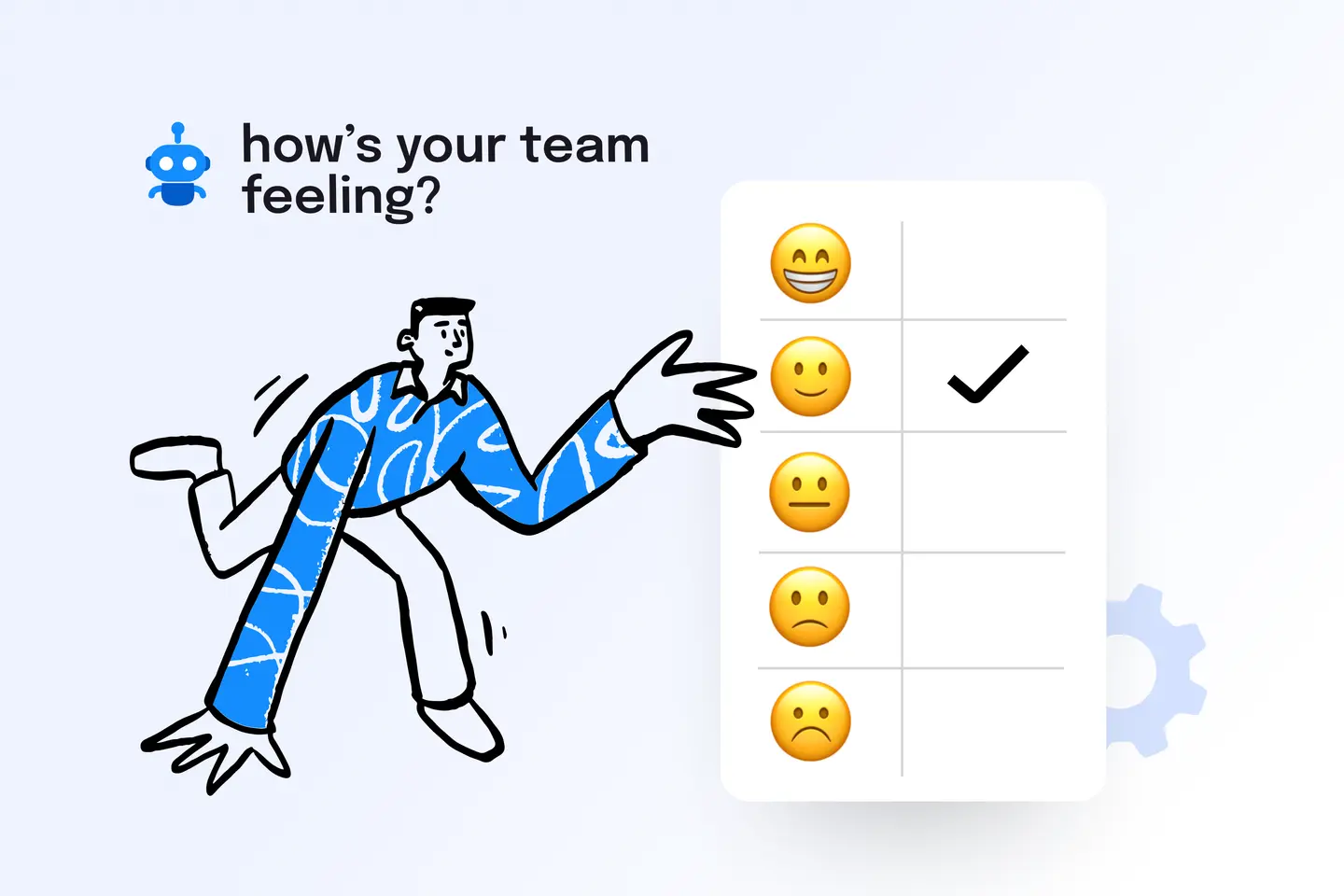
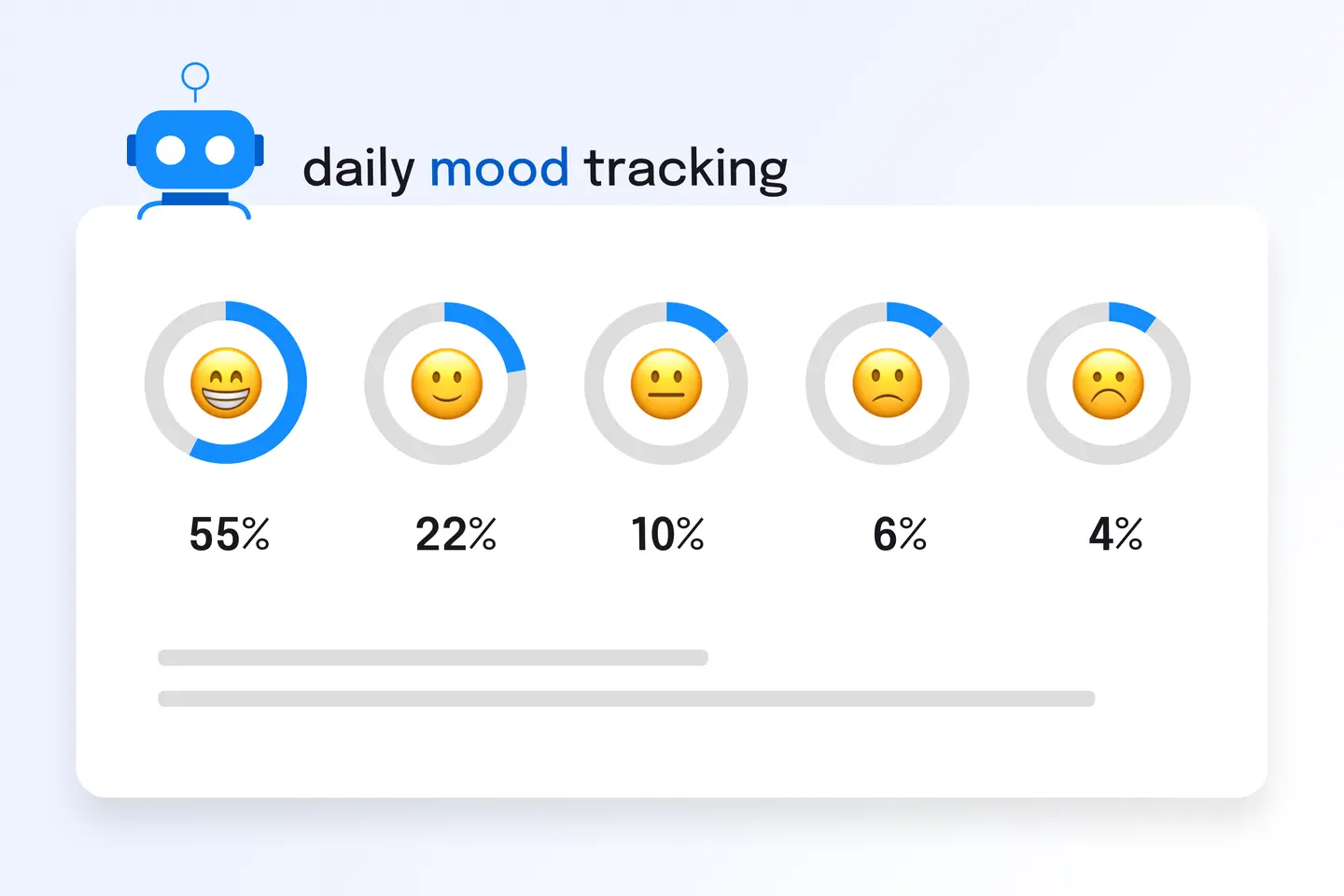
Finally, the feature that matters the most in this blog is mood-tracking. Mood-tracking on Sup is extremely simple. Tracking mood doesn’t need any additional effort on SUP. While scheduling your stand up or followup surveys, simply enable the mood-tracking option–and Sup does the rest. While conducting the survey, Sup will ask users “How are you feeling today” with relevant mood response options. Sup will anonymously store the mood responses submitted by your employees. And, compile the responses using a powerful BI tool [Draxlr](https://www.draxlr.com/), into graphs & charts representing your team’s average mood for a week or a month. Sup can also send you a weekly or monthly mood tracker report.
Enabling Mood tracking on Sup
- Open your "Sup" App on Slack.
- Launch the web-based dashboard from the "Home" section.
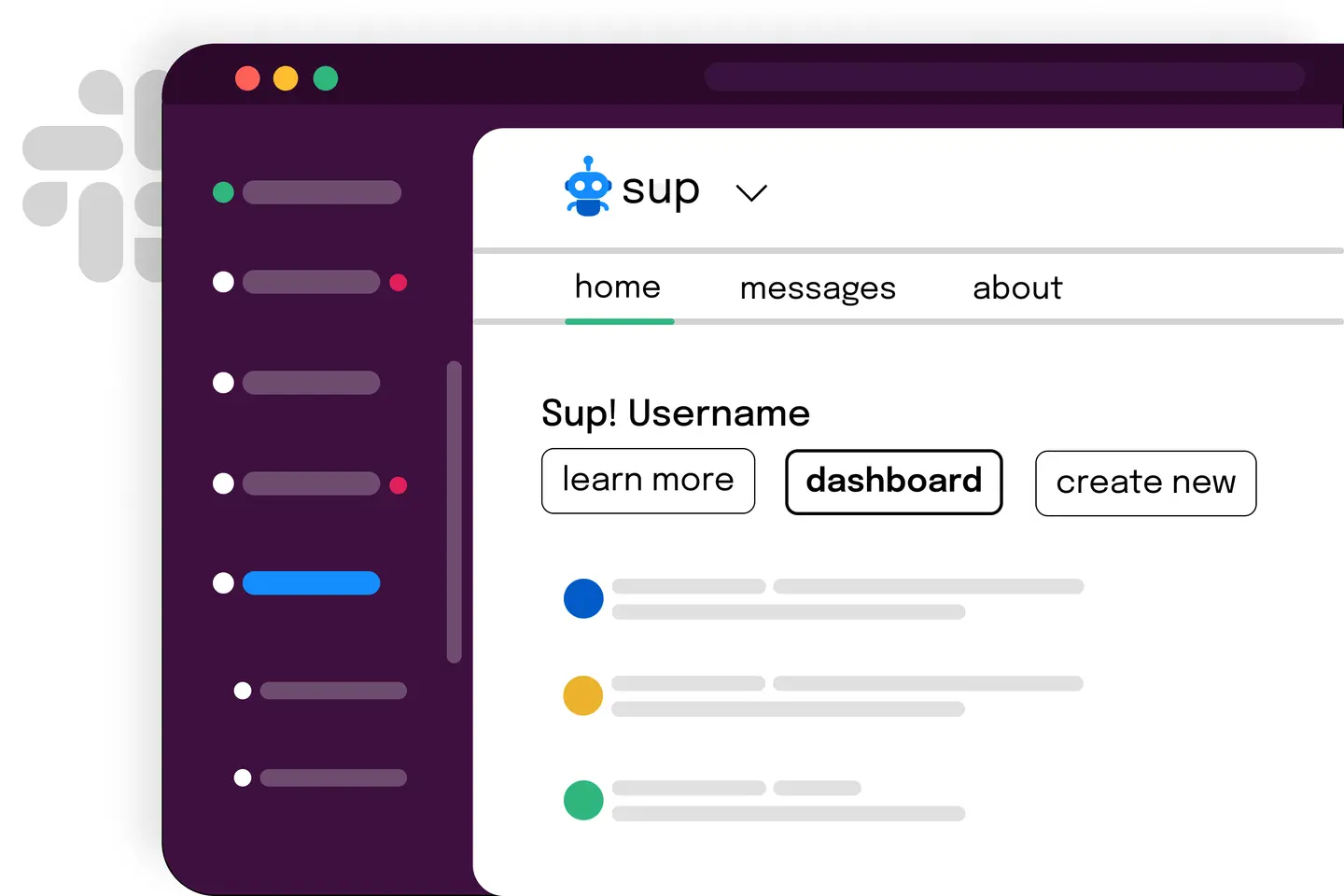
- Select the followups section from the left sidebar of the dashboard.
- Click the create followup button at the top right corner.
- This will open the create followup form.
- On the first page, you set the followup title, scheduling time & days of the week, and reminders (up to three reminders at a minimum interval of 15 mins and maximum interval of 60 mins.)
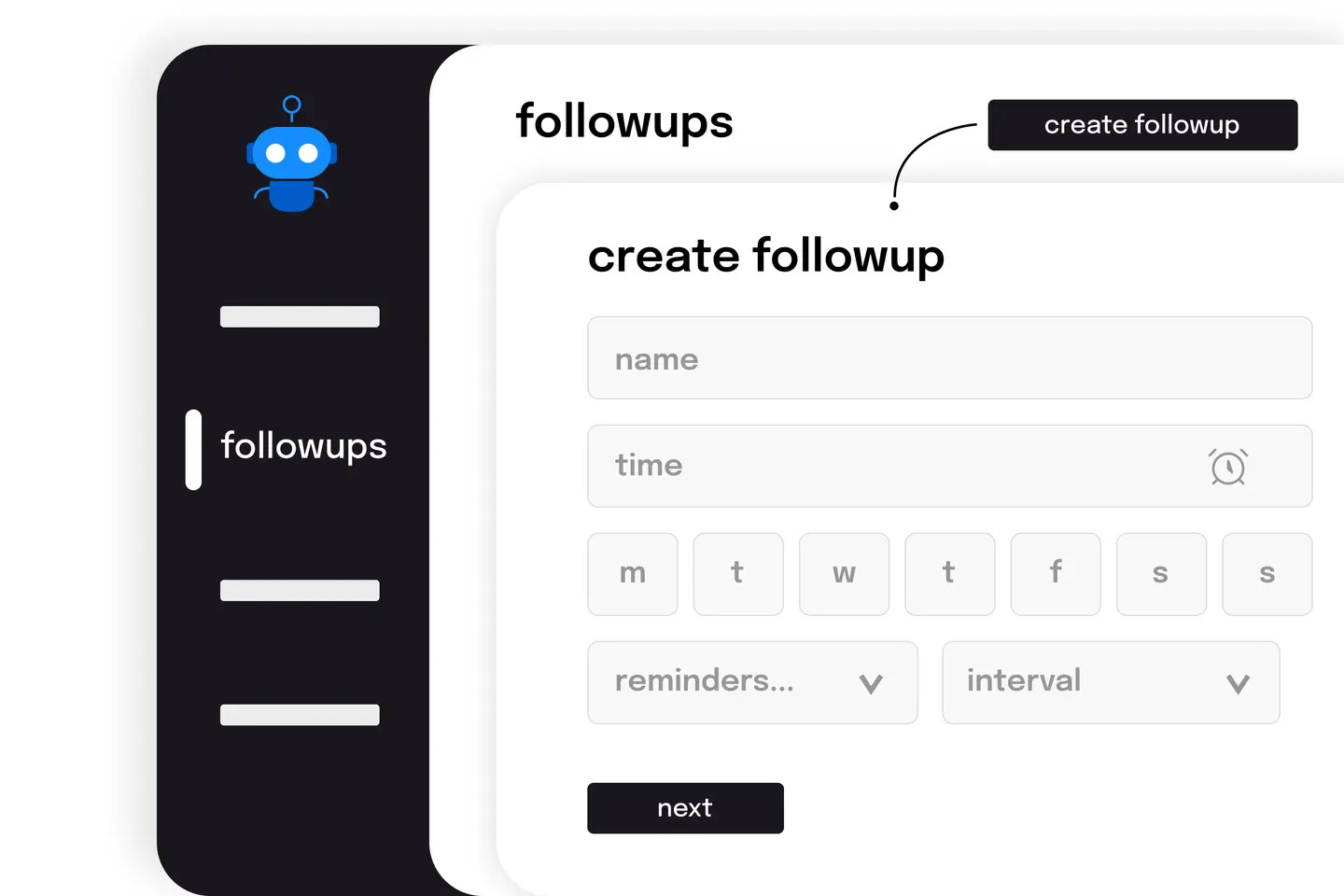
- Then you hit “Next” for the next page of the form.
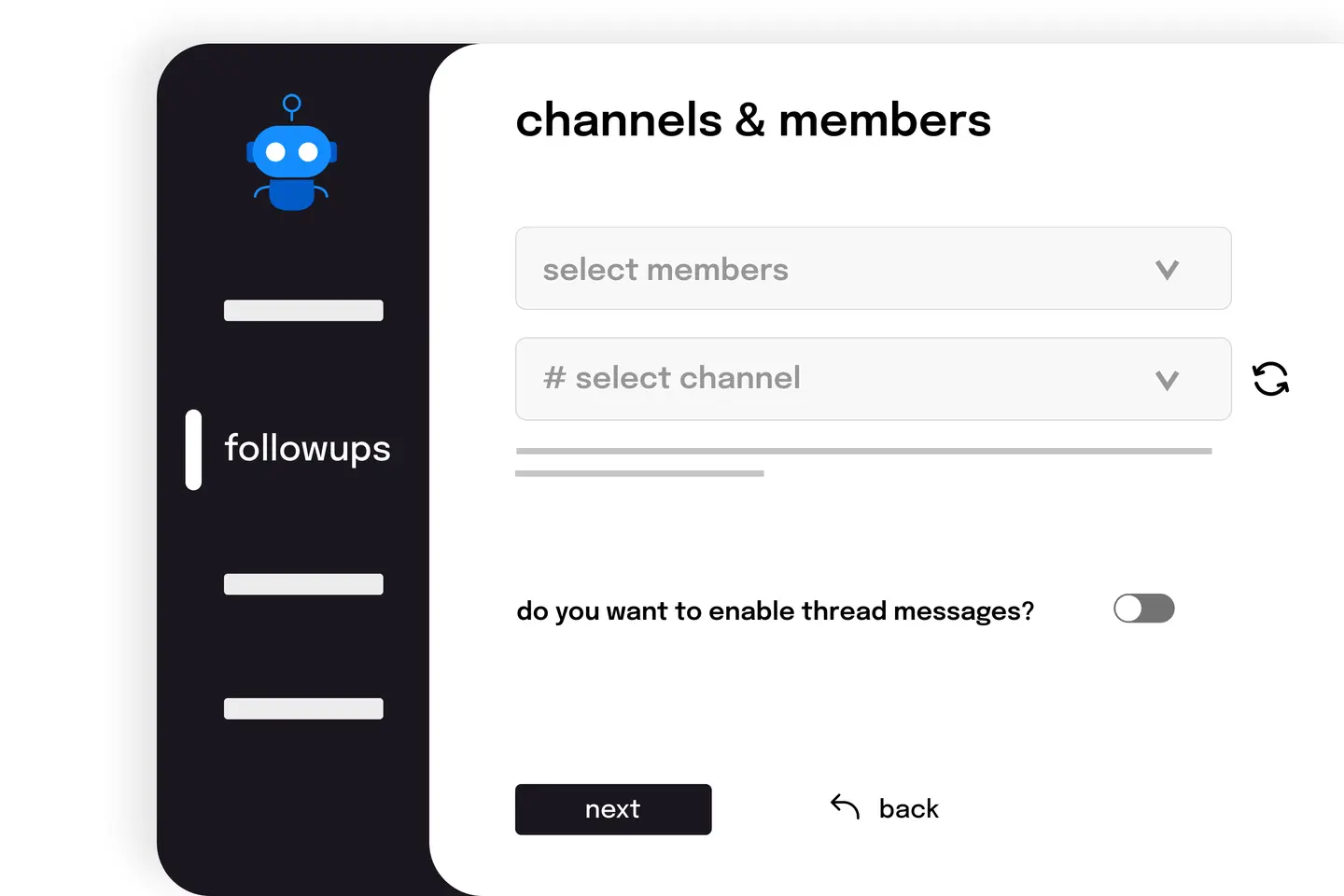
- On the second page, you select the members for whom you want to schedule the surveys. And, select the Slack channel where you want the responses posted.
- You can enable thread messages, doing so will make Sup create a thread conversation in the selected channel with all the responses instead of posting each response as a separate message.
- Then you hit Next for the next page of the form.
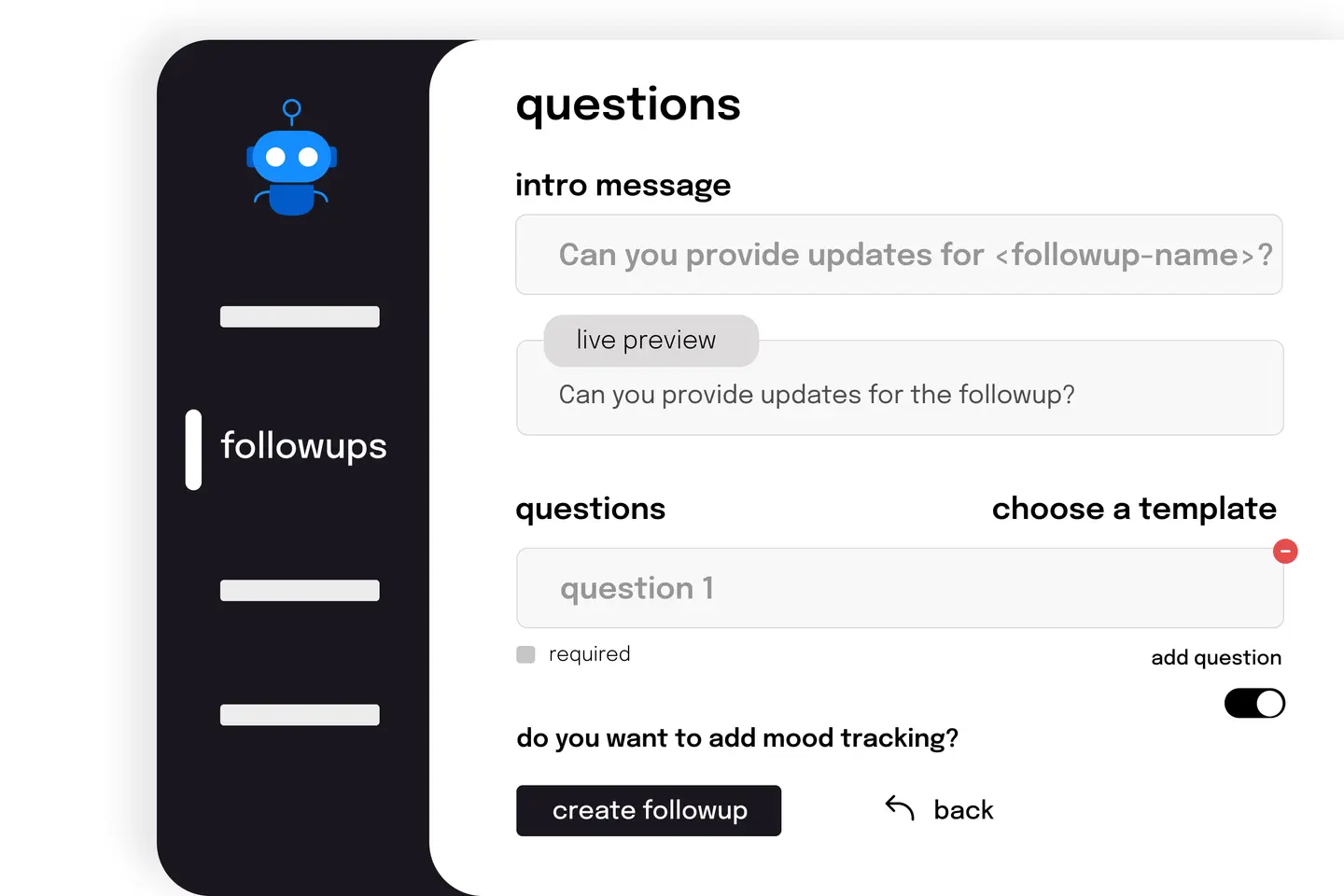
- On the third page, you can type in the intro message, this message is what Sup will prompt on Slack as a notification message asking you to take the survey at the scheduled time. You can also take a live preview of the intro message.
- You can then type in your own questions, or choose a set of questions from the existing question templates (previously saved by you.)
- Finally, you get the mood tracking option, do you want to add mood tracking?
- Toggle the switch to enable mood-tracking for this survey.
- When all is set, click the create followup button.
Schedule dedicated mood-tracking surveys
Mood-tracking is usually enabled for stand up surveys, or end-of-day update surveys. However, if you want to have a deeper understanding of your team’s mood points and patterns-you will need to build a thorough mood tracker template. A template that will conduct both daily mood-tracking and dedicated mood surveys asking deeper mood-related questions. In this case, to come up with useful questions, you will need some understanding of mood and discrete emotions-as we discussed at the very beginning of this blog.
10 Questions to include in dedicated mood-tracking surveys:
- How enthusiastic do you feel today? (rate on a scale of 1-10)
- How anxious are you today? (rate on a scale of 1-10)
- How calm are you today? (rate on a scale of 1-10)
- How satisfied do you feel today? (rate on a scale of 1-10)
- How happy do you feel today? (rate on a scale of 1-10)
- How confident about your tasks are you feeling today? (rate on a scale of 1-10)
- Do you feel rested or exhausted?
- How is your workload today? (rate on a scale of 1-10)
- Are you anxious about your task deadline?
- How positively are you feeling about your co-workers? (rate on a scale of 1-10)
Amidst tracking tasks and managing sprints, team mood often takes a backseat. That definitely should not be the case. Without considering the team mood implications, you will never get the management measures right. Mood-tracking provides invaluable insights for sprint planning. Get Sup for your Slack team and track their daily emotions, without any additional hassle.
Frequently asked questions
1. How to check on team mood?
You can track your team's mood using Sup Bot's mood tracker. This enables you to receive daily average mood updates and a weekly mood report.
2. Why is tracking mood important?
Tracking your team's mood allows you to keep a tab on your team’s vigor. It gives you insight into your team’s engagement and motivation levels.
3. How to gauge the mood of the team?
Use Sup Bot’s mood-tracking feature to assess your team's mood with customizable names and timely reports, helping you stay on top of your team's morale.
4. What does mood check mean?
A mood check is a simple survey that helps you understand your current emotional state. In simple terms, it helps you identify what you are feeling.
5. What is team mood?
Team mood is the aggregate mood of your entire team taken together. It reflects your team’s feelings-positive or negative-towards their work, co-workers, and the company.