
So, in today’s episode of different types of meetings, we have with us a daily Scrum meeting! Loud cheers everyone. We only have 15 minutes with it. Let us introduce you to it.
What is a Scrum meeting, then?
A Scrum meeting is a type of meeting held by Scrum teams for a brief period of time. Popular among software teams working with the Agile methodology, this meeting is held for the developers and by the developers
The scrum framework enables the scrum team to hold a variety of different meetings for varying purposes. Like:
- Sprint planning meeting: During this meeting, the scrum team examines the product backlog and, with the assistance of the scrum master, pulls the tasks into a sprint backlog that the team must commit to completing within the sprint duration, which can range from 1 to 4 weeks.
- Daily scrum meeting: The team meets every 24 hours during the sprint to discuss their progress in a stand-up meeting or a daily scrum meeting where only three questions are addressed: what was done yesterday, what will be done today, and are there any blockers?
- Sprint review meeting: Held at the end of a sprint, this meeting concentrates on presenting the results obtained in the most recent sprint to the stakeholders(internal or external) and soliciting their feedback.
- Sprint retrospective meeting: A meeting for reflection, this is an opportunity for the team before starting a new sprint to see what worked in the last sprint, what didn’t, and how they can improve the next sprint.
You see, there are quite a number of them. But, when we say a scrum meeting, what we typically mean by them is the daily scrum meeting.
These daily scrum meetings are always held at the same time and in the same place every day. Spanning for a maximum period of 15 minutes, it can be attended by anyone to see where things stand by the project. But the heroes of the meeting are:
- The product owner - communicates the Why?
- The scrum master - helps to find the How?
- The development team - builds What?
But hey, how is a daily scrum meeting different from other meetings?
Not gonna lie, we saw this coming. A scrum meeting can seem to be much similar to other meetings. But, in reality, it is not. In what ways, you ask? Well, here they are.
- Set time limit: A scrum meeting can run for a maximum duration of 15 minutes, not more than that. This ensures that the meeting adheres to the set agenda and there is no possibility of a detour. Team members are usually accorded a minute each to speak.
- Not a status update meeting: Status update meetings of the waterfall model involve individuals reporting to the manager or the product owner. But daily scrum meeting of the Agile framework involves reporting to each other, the Scrum team. A 15-minute meeting committing to each other and not the management.
- Not a problem-solving meeting: Another feature that most people assume the daily scrum to have is problem-solving. But, let’s think for ourselves, can a 15-minute meeting solve all problems that each team member may come up with? Certainly not. All matters arising during a daily scrum will be taken care of by the Scrum master and can be kept another meeting for it.
- Run with a fixed agenda: Unlike other team meetings that have different agendas each time they are held, scrum meetings have a fixed agenda - only 3 questions to be answered by all.What did you accomplish yesterday?What will you accomplish today?Are there any blockers?
- Uniformity of time and place: Scrum meetings are always held at the same time and place every day. This ensures that team members are aware of the place and time beforehand and can plan their activities around them accordingly. Such a feature prevents any waste of time and energy.
Are these traditional scrum meetings always effective?
Let me take you through the evolution of our daily scrum meeting process. Before we built Sup, we used to hold physical stand-up calls, where the person hosting would take note of everyone's progress and clear any blockers. However, with the outbreak of the pandemic and the subsequent lockdown, we had to pivot and find a new way to conduct our meetings. We started using online meeting apps like Meet to hold virtual meetings, but instead of the host taking notes, we asked attendees to update their progress on a Slack channel.
However, this new process came with its own set of challenges. Like:
- We found ourselves waiting for 2 to 3 minutes for everyone to join the meeting, which was eating into our 15-minute meeting time.
- The difference in time zones was causing issues, as some members were attending the meeting in the early morning while others were attending in the evening which was hindering productivity.
- Some members would forget to update their progress, necessitating multiple reminders throughout the day from the host. This would consume valuable time that could have been used to concentrate on critical updates and problem-solving.
What’s the way out?
Well, consider using Sup Bot - a standup bot for asynchronous meetings that can be run on Slack or Microsoft Teams. So, how does it help you?
 Add to Slack
 Add to Teams
 Add to Webex
- Asynchronous meetings: When you create an asynchronous daily stand-up on Sup, you eliminate the need for everyone to be together at the same time, which is a major issue for remote teams with different time zones.
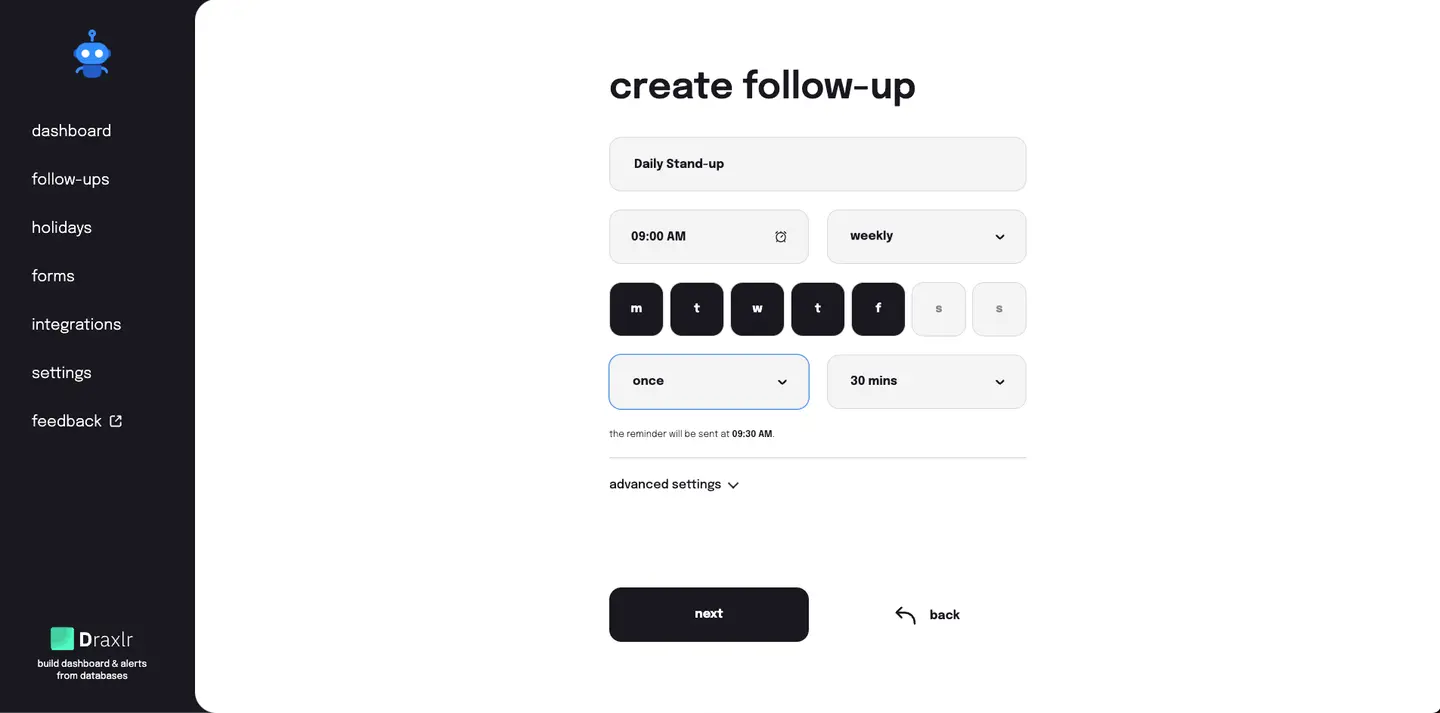
- Text-based online meetings: The daily standups on Sup are text-based and online. This makes it super easy to respond to the 3 questions, removing the need to wait for your turn to speak.
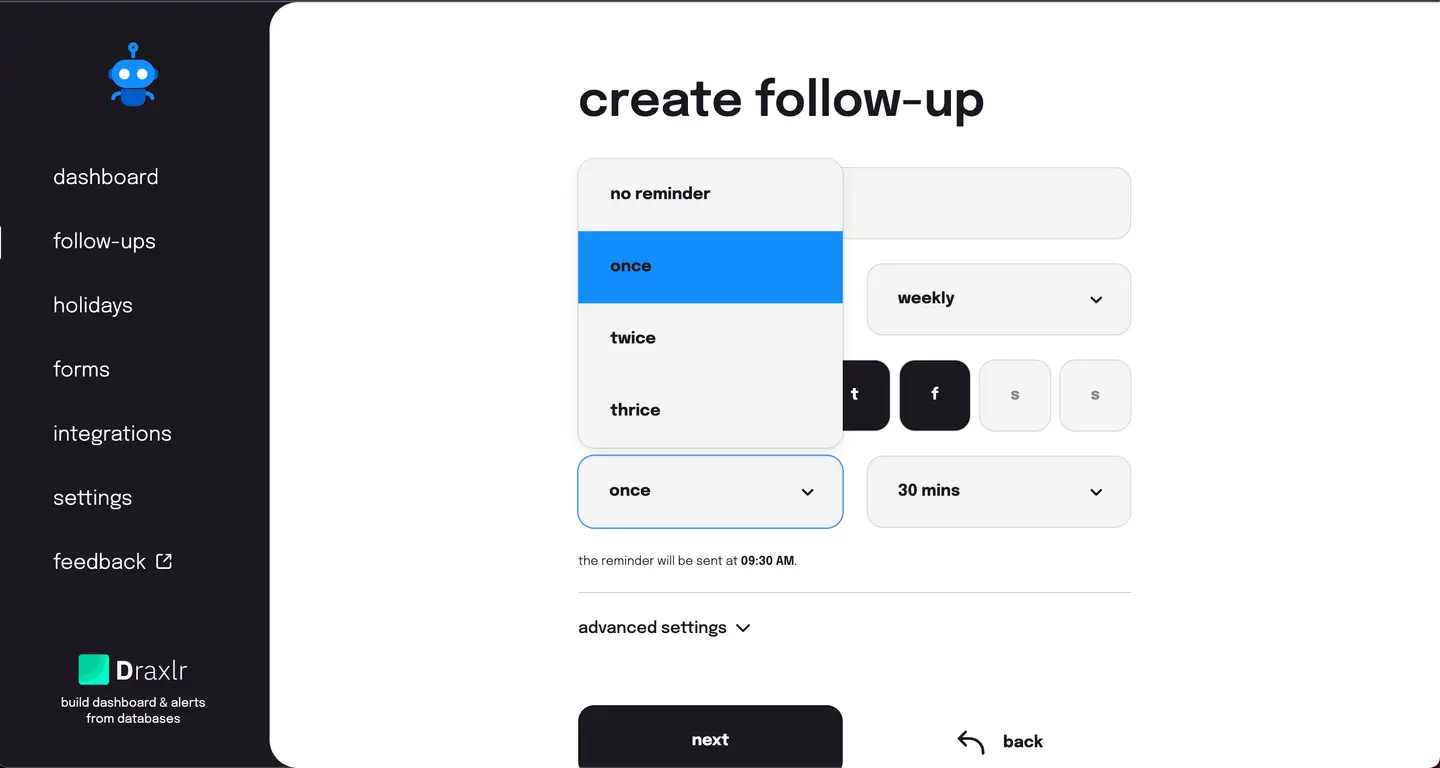
- Consistent reminders: The need for having an asynchronous bot for your team to update progress can go in vain if team members decide to answer it later and then forget about it. Sup comes to your rescue and sends reminders in case one has not responded to the questions. You can ensure this by setting the frequency at which reminders must be sent
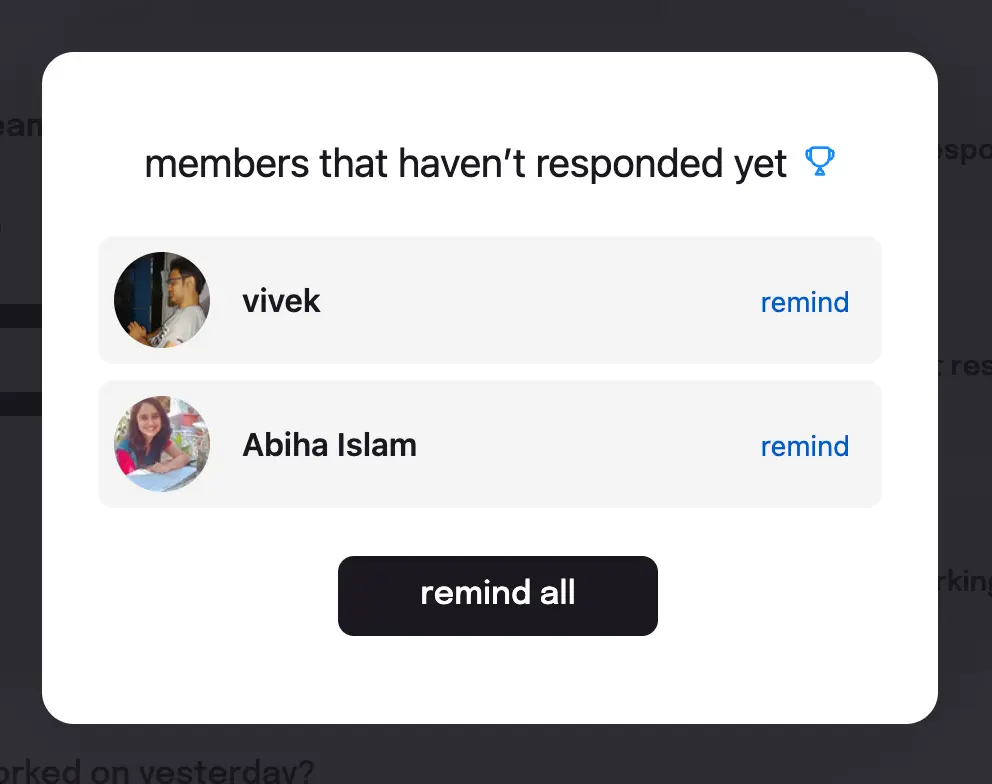
In addition to the option of setting the frequency at which reminders are sent, Sup also allows users to send custom reminders to team members who have not responded to the questions posed by the asynchronous bot. This can be done by simply clicking the "remind" button, which will trigger a notification to be sent directly to the team member in question.
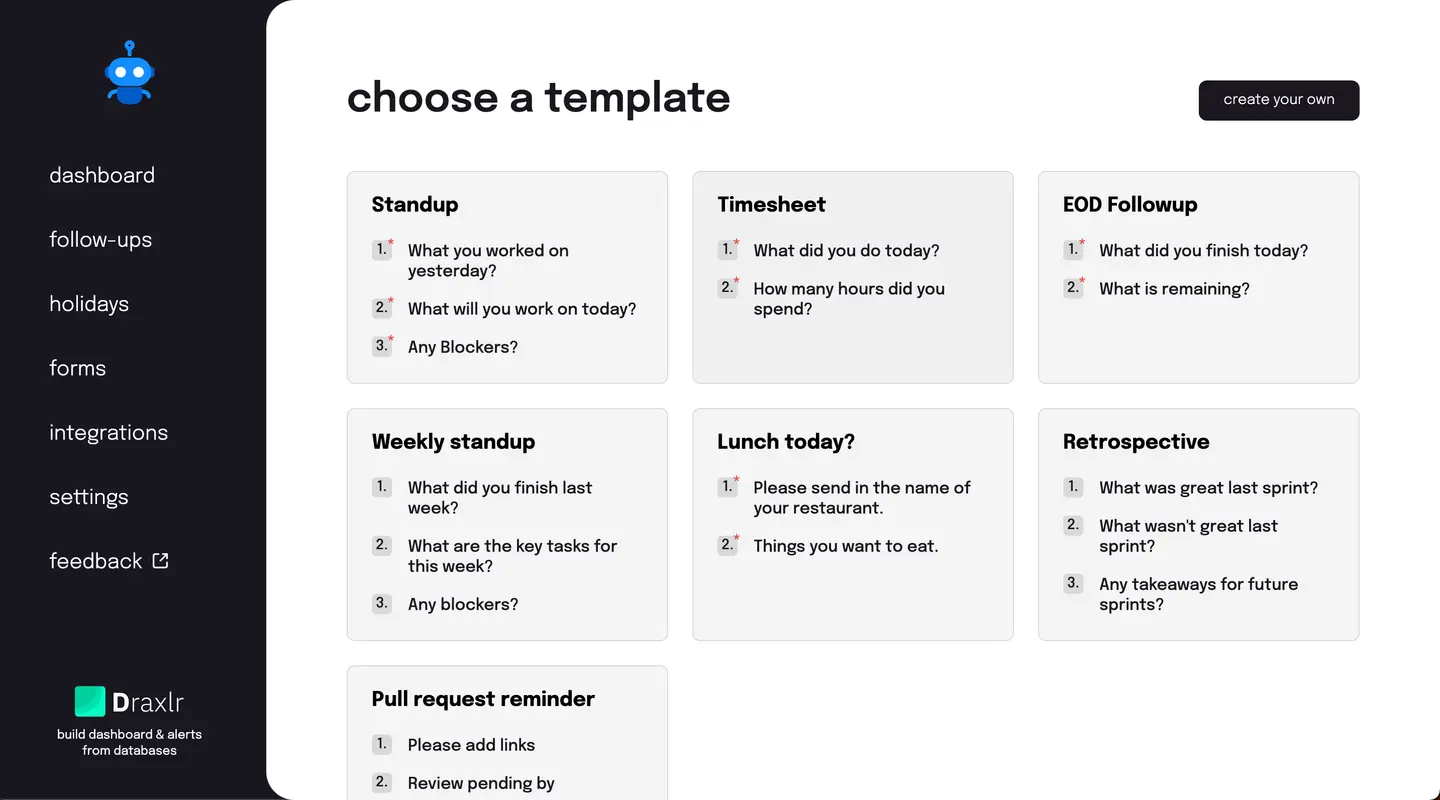
- Pre-designed template: Sup knows that it can be hard to use a new tool or platform, especially when putting in place new processes like daily scrum meetings. To make the transition smoother, Sup offers a predefined template for daily scrum meetings, which makes it easier for users to get started with the bot and begin tracking progress updates right away.
You can choose to create the daily standup on Sup using the given template or create your own. The pre-designed template already contains the 3 questions required for a daily scrum meeting
The pre-designed template saves you from wasting time and energy on creating one on your own. However, you can choose to add more questions or edit them at your convenience.
Do much more!
Well, if you thought that was all Sup had to offer, you weren’t right. In addition to creating daily stand-ups for you, Sup can be used to build surveys and polls as per your need. Again, they too come with pre-designed templates or you can choose to create one.
Other than this, you can use Sup to track team mood to judge the team morale while also requesting, approving, viewing and managing your team holidays. Such an efficient tool! What do you think?