
What is a staff meeting?
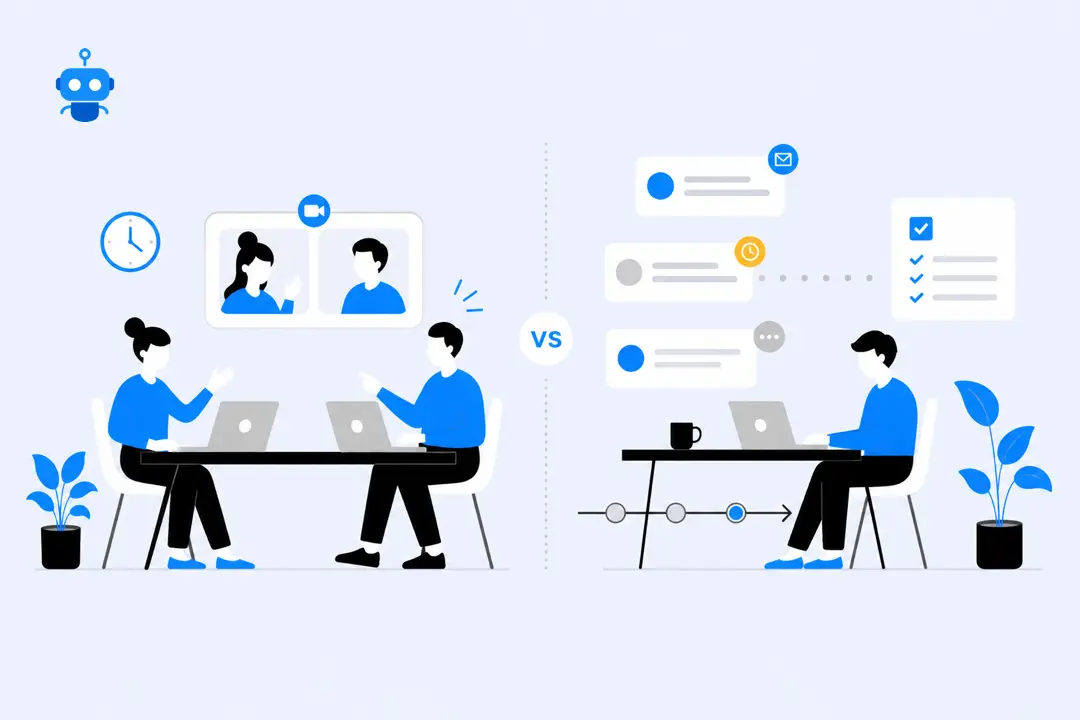
Chances are, we all know what staff meetings are. We have attended at least one so far in our professional lives. This is mostly because of the consistency of their frequency. To break it down for you, they simply are regular meetings held physically or virtually, to discuss important matters that require either the entire team or specific team members to be present.
Why must you have a staff meeting?
The meeting is a word most of us respond to with quick resigned glances from our fellow colleagues. Hehe, all are guilty here. But, oh boy, are they important! With so many pros on his hat, staff meetings are the dude everyone underestimates. Let’s see how.
- Fosters a spirit of creativity: When the team comes together for a staff meeting, it provides an opportunity for them to collaborate and bounce ideas off each other. This can lead to creative solutions that may not have been possible if individuals were working alone.
- Promotes transparency: Providing your team with the appropriate information is crucial to their success. By sharing information openly and proactively, establishing clear expectations, and promoting transparency, you equip your team with the necessary knowledge and context to excel in their respective roles. When information flows openly, team members feel included and are able to work with greater confidence.
- Motivates and encourages: Use staff meetings to talk about the company's recent wins, successes, or progress towards important goals. Celebrate what the team has done and mark important milestones. This helps employees see how their work affects the world and makes them want to do more. You can also use this as a chance to recognise and reward employees who have done a great job, which will encourage the rest of the team to do the same.
- Builds commitment: A staff meeting serves as a forum for discussing problems and generating potential solutions to those problems. The members of the team will develop a stronger commitment to the organization's mission and a greater sense of ownership in the organization's success if they work through these challenges together.
- Promotes communication: One feature that almost all staff meetings don is sharing of updates. From how a project is running to any roadblock that team members are facing, to a milestone that the team has covered, these meetings will discuss it all. This helps in keeping everyone abreast of what’s churning in the organization.
How to run an effective staff meeting 101.
Conducting staff meetings, so to speak, is not a herculean task. But, what is a herculean task is, conducting effective staff meetings. We all love a simple manual to run things. So, why not have one for an effective staff meeting as well? Let’s go through the one below to know the dos of a staff meeting:
The Prep
- Arrange the agenda in advance: Every staff meeting must have a pre-distributed agenda. Without an agenda, meetings can quickly derail, be hijacked by a random topic, or include uninvited guests. Also, it is important to give attendees any data, reading, or agenda they’ll need ahead of time. Don’t distribute it when they arrive. Everyone being prepared is the goal!
- Determine - where, when and how: Determining and sharing the location, time and format of the meeting is as important as the above steps if not more. Usually included with the agenda, this is a significant step to make sure that everyone gathers in the right location and at the right time so that the work and cost of preparing for the meeting do not go in vain.
- Identify and invite: When the objectives and the agenda have been set, it is most likely that the key participants have also been identified. Doing so and ensuring that these participants are in attendance is important to the success of the meeting.
The Run
- Maintain punctuality: Starting and ending staff meetings on time not only makes you seem professional but also a person worthy of respect. This is so because employees schedule their work according to the timings mentioned on the agenda. So, maintaining punctuality not only guarantees that their time is respected but also ensures that their work is not impacted.
- Stick to the agenda: Adhering to the agenda has a number of benefits, one of which is ensuring that you do not miss anything important and that you cover every essential point. This is in addition to the benefit of showing respect for the time that other people have to devote to the meeting.
- Encourage all to participate: How do you make everyone participate in the meeting? including the ones who are more reserved and quiet? Well, you should be encouraging the members of the team to offer their ideas first, particularly the ones who are less likely to speak up. Most staff meetings have a lot to share and inform. But that doesn’t mean you use up all the time doing that.
The Sign-off
- Review action items: Examine all of the items that need to be done, the dates by which they need to be done, the assignments, and any planned next steps or milestones for the team. Do not let participants leave feeling confused about their responsibilities or the time at which they must report their findings. It's possible that not everyone in attendance will hear a discussion in the same way, which can make everyone feel frustrated. Because of this, providing a summary is extremely important.
- Distribute meeting notes: It is highly likely that the meeting attendees are rushing to another meeting or to start their paused work after the current meeting ends. Such a quick shift of attention can make the meeting organizer worry if “out of sight, out of mind” is really a thing. To break it to you, it is. But, we do have a solution here: Document the meeting decisions, and action items and distribute them to participants so that they can go through them later once they are free.
- Evaluate to improve: Get the team’s opinion to understand how the meeting added up to their expectations. Identifying room for improvement through such feedback will not only improve future staff meetings but also prevent you from wasting your time on planning activities that reduce the effectiveness of meetings. You can use Sup’s quick survey poll or its forms feature to collect comprehensive feedback.
- Thank and appreciate: Acknowledgement of the precious time spent by team members to attend your meeting goes a long way in making them feel a valuable part of the company. Thanking for and appreciating their attendance and opinions creates room for a better relationship with your employees.
Why do staff meetings fail?
1. Planning the meeting at rush hour
The human brain is so capable that it can think in complex ways and has deep insights, but just like traffic, our minds can get stuck during busy times.
Your brain flits around in the morning, solving problems like "Did I lock my house? When will John be available to clear my doubts? When is the next payday? etc. The end of the day can be equally challenging, if not more so. Do I need to buy groceries? Clear dishes? Can I make it on time for my yoga class? etc.
Would you knock on a door when you know there is no one inside to answer you? then why schedule at rush hours? Also, be mindful of the time zones of all staff members if you have a remote team.
2. Disrespecting people’s time
The office meetings usually receive negative reactions they do because of their reputation for not starting on time and ending late. Such disrespect to people’s time can make employees abhor them. Imagine what respecting their time can do instead!
3. Over-inviting participants
How often have you asked this question when attending meetings? Why am I here? I believe repeatedly. The amount of time we wasted on meetings where we weren’t supposed to be would be astronomical if we could get some analytics. Or perhaps we can. You can read how much time companies waste every day and check for yourself. Anyway, my point is that the increased number of attendees just exponentially increases the inability to reach any decision.
4. Losing track
Deviating from the set goal tends to take up important time that could have been used to discuss the topics shared on the agenda. This is why it is helpful to periodically review the meeting goals and agenda during the meeting and cross them off once they have been covered.
5. Communicating with one attendee only
A one-on-one conversation is best kept for after the office meetings if it warrants such importance. Other than that, making a meeting majorly about a conversation with an individual disregards the entire point of holding an all staff meeting. Duh.
Conclusion
An average staff meeting is what most people do. But, an effective staff meeting is what most people aspire to do. While it can be difficult to align our actions with our aspirations, it is not entirely undoable. So, set your intentions and take on staff the Do’s and Don’ts mentioned above to have the most effective staff meeting ever!
 Add to Slack
 Add to Teams
 Add to Webex
Frequently asked questions
1. What is a staff meeting?
A meeting where a manager or a supervisor will typically preside, which is a scheduled gathering of employees within an organization. The primary purpose of a staff meeting is to discuss topics relevant to the team's or organization's operations, such as policies, project status updates, goals, issues, and plans.
2. Why is it important to have staff meetings?
It is important to hold staff meetings to encourage brainstorming and creativity, providing a platform for team members to share innovative ideas and solutions. These meetings promote transparency by keeping everyone informed about company goals, progress, and challenges, fostering trust and alignment. They also motivate the team by recognizing achievements and addressing concerns, boosting morale and engagement. Additionally, staff meetings build commitment by involving employees in goal-setting and decision-making processes, creating a sense of ownership. Lastly, they promote effective communication and collaboration, ensuring that everyone is on the same page and working together efficiently towards common objectives.
3. How to conduct a staff meeting?
Conduct a staff meeting in 5 steps:
- 1.Prepare the agenda: Create a detailed outline of topics to be discussed, ensuring all relevant points are covered and prioritized.
- 2.Set the time and place and invite: Schedule the meeting at a convenient time and location for all participants, and send out invitations well in advance.
- 3.Start on time: Begin the meeting promptly to respect everyone's time and maintain a professional atmosphere.
- 4.Review action items: Go over previous action items to track progress and address any outstanding issues.
- 5.Request feedback: Encourage participants to provide input and suggestions to improve future meetings and address any concerns.
4. What to say in a staff meeting?
As a manager in a staff meeting, start by sharing an update on the agenda to set the tone and outline the topics to be discussed. Begin with mentioning any recent achievements to recognize and celebrate the team's successes, boosting morale and motivation. Next, state the current challenges the team or organization is facing, providing context and details. Encourage team members to contribute their insights and ask for solutions, fostering a collaborative environment. This approach not only keeps everyone informed but also actively involves the team in problem-solving and decision-making processes.
5. How often should you have staff meetings?
Staff meetings should be held weekly to provide the entire team with a regular opportunity to gather, discuss important matters, and ensure clarity and alignment on goals and progress. This frequent interaction helps maintain communication, address issues promptly, and keep everyone on the same page.